
How to Prepare for a Corporate Office Move
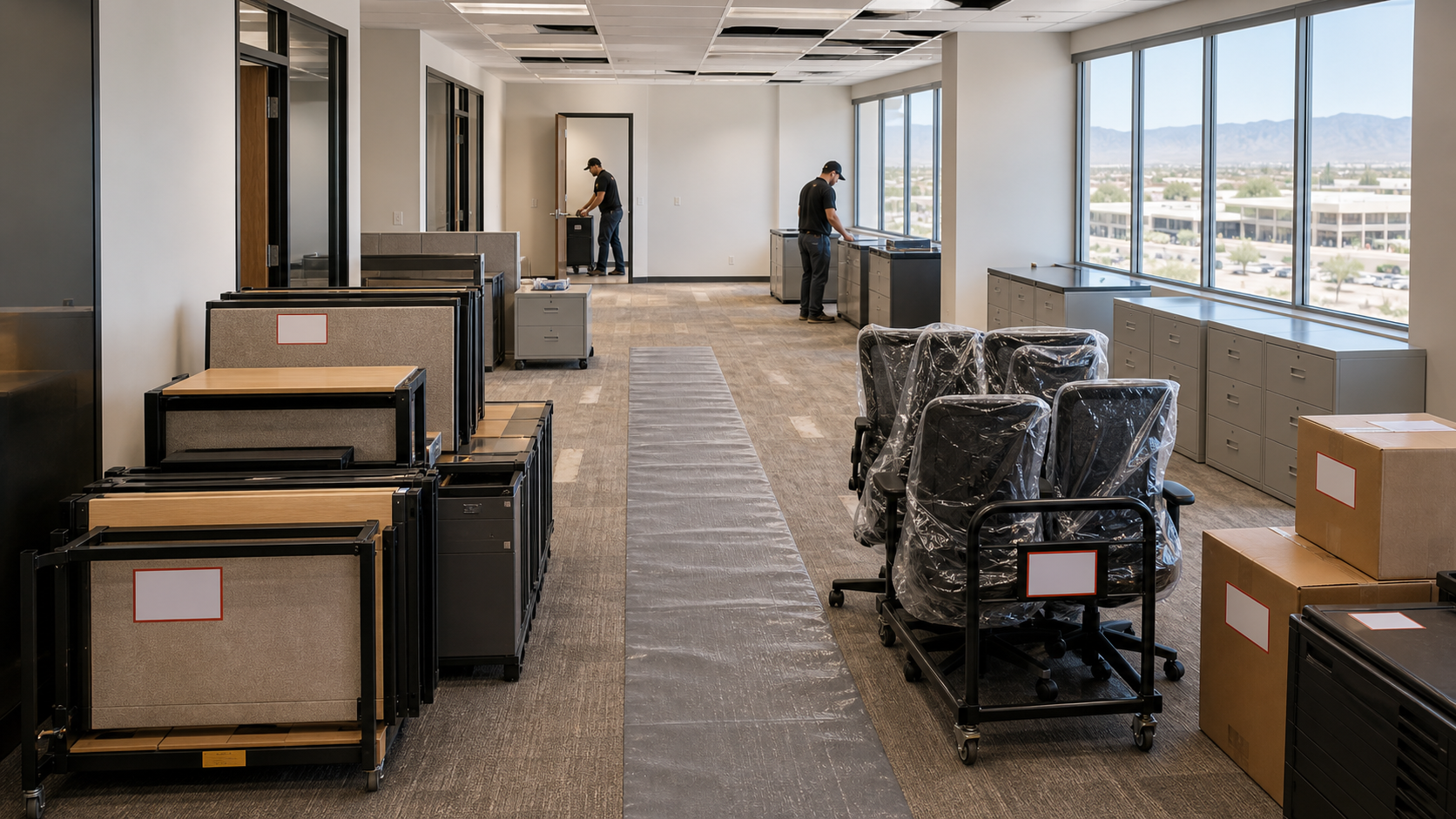
How to Prepare for a Corporate Office Move
Moving a business is different from moving a few desks. A corporate office move touches people, furniture, technology, schedules, building access, productivity, and client expectations. The more organized the plan, the smoother move day becomes.
Whether you are moving across town, expanding into a larger space, downsizing, or consolidating teams, preparation is what keeps the project from becoming chaos.
Start With a Site Survey
A good relocation plan starts with both spaces: the current location and the new one.
Review:
What furniture is moving
What is staying behind
What needs to be deinstalled
What needs to be reinstalled
Building access at both locations
Dock and elevator rules
Truck access
Timing restrictions
Floor plan at the new location
The move plan should account for both the origin and destination.
Inventory and Tag Everything
Before anything leaves the current office, it should be tagged and inventoried. This prevents confusion during transport and helps the installation crew place items correctly at the new location.
Tagging is especially important for:
Workstations
Private offices
Conference rooms
Storage
Seating
Files
Department-specific furniture
Nothing should leave the building without a destination.
Confirm the New Layout
The new space should have a clear furniture plan before the move begins. If the layout is still changing, the move becomes harder to manage.
A final plan should show where workstations, offices, conference rooms, storage, seating, and shared spaces go. It should also account for power, data, clearances, workflow, and department adjacencies.
Decide What Not to Move
Moving is a good time to edit. Old chairs, broken files, unused storage, outdated workstations, and extra furniture can create clutter in the new space.
Before move day, decide what should be:
Moved
Stored
Donated
Disposed of
Replaced
This reduces labor and helps the new office feel intentional from day one.
Coordinate Building Rules
Both buildings may have different requirements. Confirm certificates of insurance, freight elevator reservations, loading dock schedules, after-hours rules, security access, and protection requirements.
The more you confirm upfront, the less time is lost during the move.
Plan for After-Hours Work
Many office moves happen evenings or weekends to minimize downtime. If your team needs to work until Friday and arrive Monday to a functional office, the schedule needs to be planned tightly.
That includes deinstall, transport, reinstall, cleanup, and punch.
Walk the Space Before Completion
At the end of the move, do a punch walkthrough. Confirm that furniture is installed correctly, offices are set up, workstations are functional, and any open items are documented.
The move is not complete until the space works.
Use One Coordinated Relocation Team
Corporate relocation is easier when deinstall, transport, reinstallation, warehousing, and project coordination are handled together. Multiple disconnected vendors can create gaps.
ModLogics manages corporate relocation services for Arizona businesses, including office furniture deinstall, transport, reinstallation, warehousing, project coordination, and move-day support. The goal is simple: your team walks into a space that is ready to work.
