
How to Plan an Office Furniture Reconfiguration Without Buying Everything New
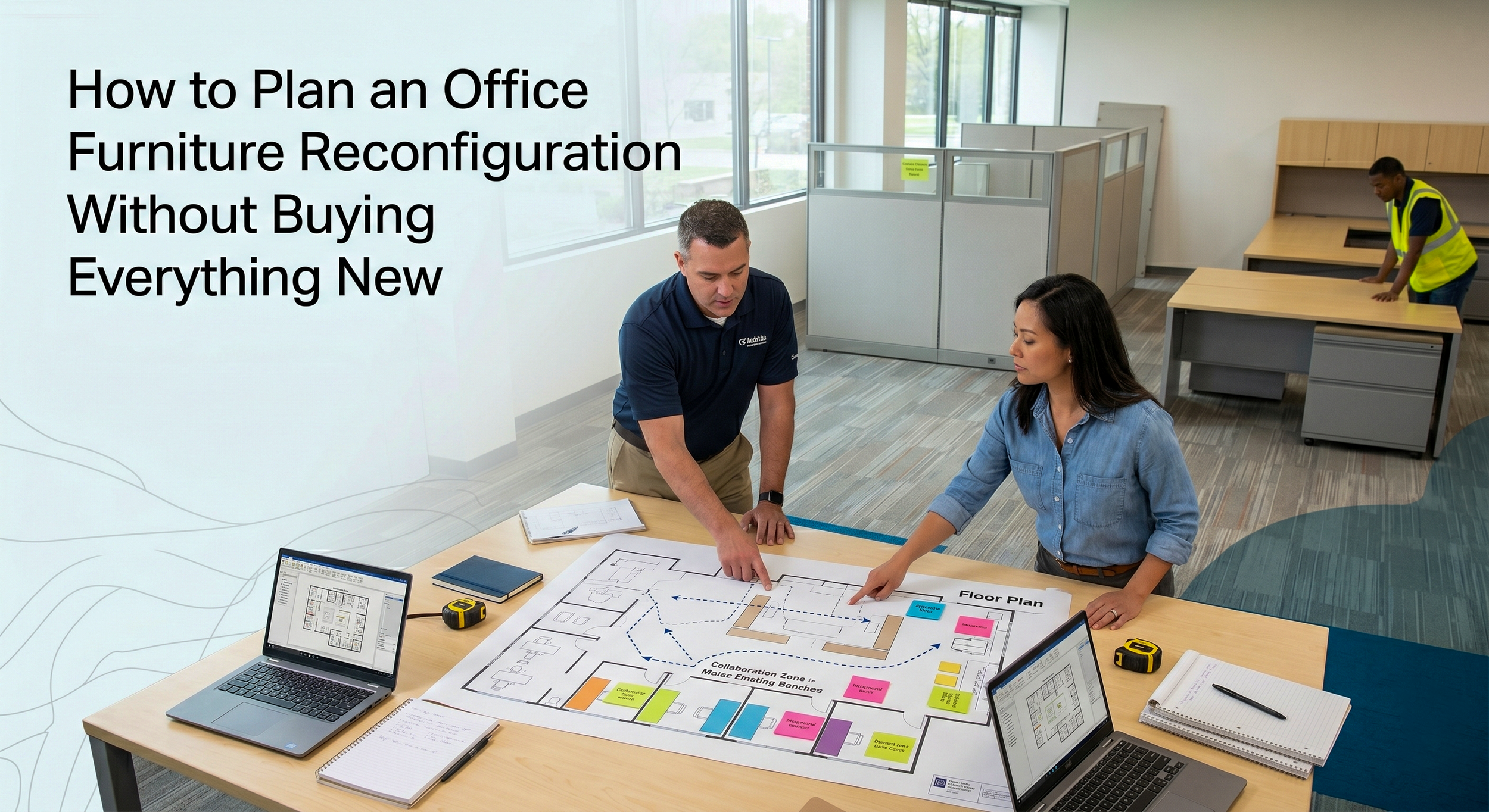
How to Plan an Office Furniture Reconfiguration Without Buying Everything New?
You do not always need new furniture to make an office work better. Sometimes the best solution is to rethink the layout, reuse what you already own, and reconfigure the space around how your team works now.
Office furniture reconfiguration is useful for growing teams, downsizing companies, hybrid workplaces, department changes, workflow issues, and businesses that want a fresh space without a full furniture replacement.
Here is how to plan it.
Start With What Is Not Working
Before moving furniture, identify the problem you are trying to solve.
Common issues include:
Not enough workstations
Too much unused space
Awkward traffic flow
Teams sitting too far apart
Too much open space
Not enough private space
Conference rooms being used incorrectly
Storage in the wrong places
The goal is not simply to move things around. The goal is to create a better working environment.
Inventory What You Already Have
Before deciding what to buy, understand what you already own. Workstations, panels, desks, storage, tables, seating, and private office furniture may be reusable in a new layout.
Inventory helps answer important questions:
What can be reused?
What is missing?
What is damaged?
What can be reassembled in a new way?
What should be removed?
This step can save a significant amount of money.
Build a New Layout
A reconfiguration needs a plan. Even if you are using existing furniture, you still need to know where each piece will go, how teams will use the space, and whether the layout is practical.
A good layout considers:
Workstation count
Clearances
Walkways
Collaboration areas
Private offices
Conference rooms
Power and data locations
Storage access
Future growth
If you already have a floor plan, your installation team can work from it. If not, a furniture partner can help create one.
Confirm What Is Feasible
Not all furniture can be reconfigured endlessly. Some systems are more flexible than others. Parts may be missing. Panels may not match. Electrical or data components may limit what is possible.
A feasibility review helps prevent last-minute problems. It also identifies whether you need a few new pieces to make the existing furniture work better.
Decide What to Remove
Reconfiguration often reveals furniture that no longer belongs in the space. Old files, unused desks, broken chairs, and mismatched pieces can make the office feel cluttered.
Removing what you do not need is part of making the new layout work.
Schedule the Work Around Your Team
Office reconfiguration can often be done after hours or in phases to reduce disruption. The right schedule depends on whether your team is working in the space, whether furniture needs to be deinstalled first, and how much of the office is changing.
For occupied offices, planning matters. The crew needs access, the team needs communication, and the project should be sequenced so people can get back to work quickly.
Reuse First, Buy Only What Helps
The best reconfiguration projects often combine reuse with a few targeted additions. You may not need all new furniture, but a few new chairs, storage pieces, tables, or replacement parts can make the space feel more complete.
ModLogics helps Arizona businesses reconfigure office furniture layouts, adjust workstations, relocate existing furniture, improve space flow, and refresh offices without starting from scratch. A smarter layout can make the furniture you already own work much harder.
